

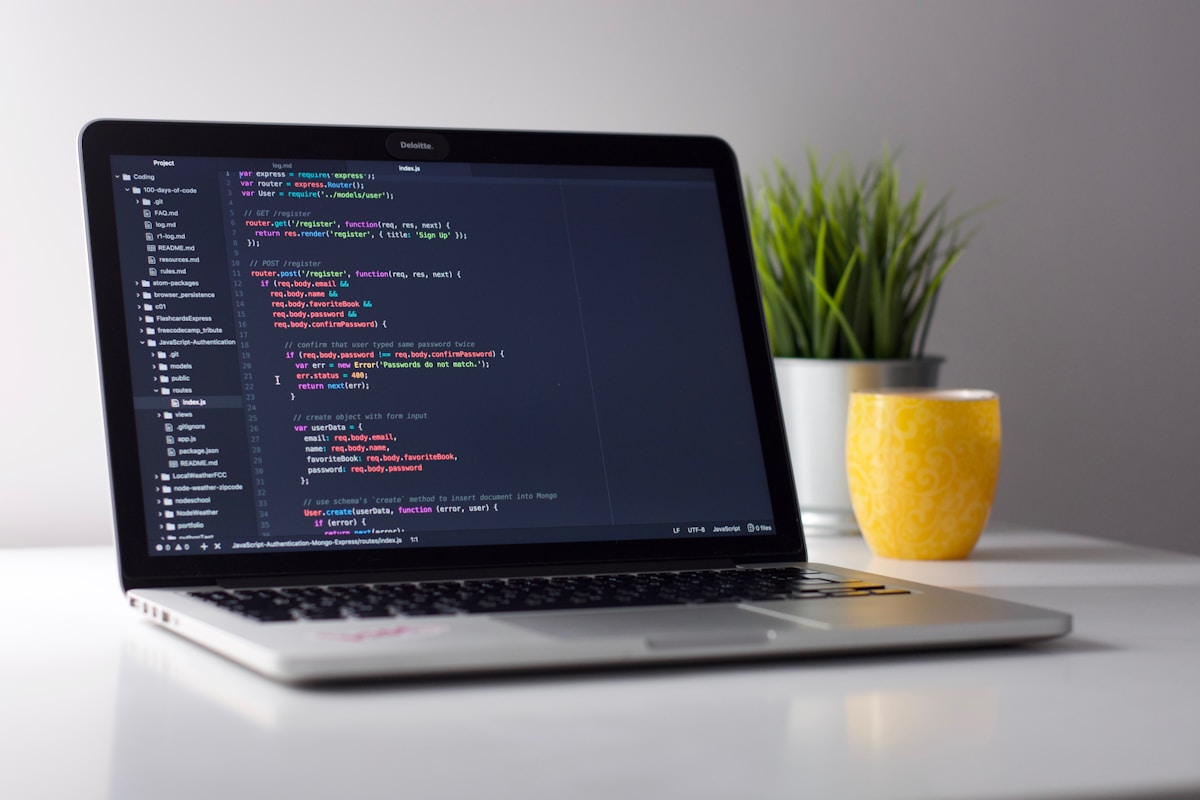
30 ChatGPT Prompts That Save Developers Hours Every Week
⚡ Quick Answer
30 copy-paste ChatGPT prompts for developers covering debugging, code review, tests, refactoring, docs and learning new codebases faster.
Get more content like this on Telegram!
Daily AI tips, notes & resources — free
Advertisement
30 ChatGPT Prompts That Save Developers Hours Every Week
The right prompt turns ChatGPT from a generic autocomplete into a fast, specific collaborator. Below are 30 copy-paste prompts grouped by task, each written to force specific, checkable output instead of generic advice.
Updated for 2026. Free-tier details change — verify before relying on any tool for critical work.
Why Prompt Quality Determines Whether ChatGPT Actually Saves You Time
Two developers can use the same model and get wildly different results, and the gap is almost always prompt structure rather than model capability. A vague prompt — "fix this bug," "review my code," "write me tests" — forces the model to guess at context it does not have, and it fills the gap with the statistically most common answer, which is rarely the answer that fits your specific codebase.
The 30 prompts below share a structure worth naming explicitly: every one includes concrete context (the actual error, the actual code, the actual framework version), a specific constraint (what to avoid, what to prioritize, what format to answer in), and often an explicit reasoning step before the final answer. That structure is what separates a prompt that saves you twenty minutes from one that costs you twenty minutes cleaning up a generic response.
Treat the bracketed placeholders in every prompt below as mandatory, not optional. The moment you skip filling in the actual error text or the actual code snippet and just ask the general-shaped question, you have reverted to the vague version and lost most of the benefit.
Debugging
1. "Here is the error message: [paste exact error]. Here is the surrounding code: [paste code]. I am using [language/framework, version]. Explain the most likely root cause before suggesting a fix, and list two alternative causes if the first is wrong." — Forces the model to reason about cause before jumping to a fix, which catches wrong-guess fixes early.
2. "This function works for these inputs [list] but fails for this input [example]. Walk through the function step by step with the failing input and tell me exactly where the logic breaks." — A traced walkthrough finds off-by-one and edge-case bugs faster than asking for a general fix.
3. "I've tried [X] and [Y] to fix this and neither worked. Here's what happened with each. Don't suggest either of those again — think about what else could cause this symptom." — Prevents the model from looping back to fixes you already ruled out.
4. "This code passes in [environment A] but fails in [environment B]. Here are the two configs: [paste]. What environment-specific difference could explain this?" — Targets the class of bug most developers waste the most time on: environment drift.
5. "Here is a stack trace: [paste]. Translate this into plain English, one line at a time, and tell me which line in my code is the actual point of failure versus just where the exception surfaced." — Distinguishes the real bug location from the visible crash site, which are often different lines.
Code Review
6. "Review this function for edge cases I have not considered, and explain the failure scenario for each one you find." — Specific and falsifiable, unlike "review my code," which tends to get vague praise.
7. "Review this code as if you were a senior engineer doing a strict pull request review. Be blunt. Flag anything you would block the merge for, separate from anything you'd only leave as a suggestion." — The role and severity split produces a prioritized list instead of an undifferentiated wall of comments.
8. "Check this code for common security issues relevant to [language/framework], such as injection, unsafe deserialization, or missing input validation. Only flag things that are genuinely exploitable, not stylistic nitpicks." — Filters noise so security findings don't get buried in style comments.
9. "Does this function do one thing, or is it doing too much? If it's doing too much, suggest how you'd split it, but don't rewrite it yet — just outline the split." — Gets a design opinion before committing to a rewrite, cheaper to evaluate.
10. "Compare this implementation against the general best practices for [pattern name, e.g. repository pattern] and tell me specifically where it deviates and whether the deviation is a problem here." — Anchors the review to a named standard instead of the model's vague sense of "good code."
Writing Tests
11. "Write unit tests for this function covering: the happy path, at least three edge cases, and one case that should raise an error. Use [testing framework]. Explain what each test actually verifies in one comment line." — Requiring a comment per test forces genuinely distinct test cases instead of five copies of the happy path.
12. "Here is a bug that just got fixed: [paste the fix]. Write a regression test that would have caught this specific bug before the fix was applied." — Regression tests tied to real bugs are far more valuable than generic coverage tests.
13. "This function has no tests and I'm about to refactor it. Write characterization tests that capture its current behavior exactly, including any behavior that looks like a bug — don't fix anything, just describe what it currently does." — Safety net for refactoring legacy code without accidentally changing behavior no one documented.
14. "Given this API contract [paste], write tests for the failure responses too — timeouts, malformed input, and rate limiting — not just the success response." — Most AI-generated test suites skip failure paths unless explicitly told to include them.
15. "Review this existing test file and tell me which tests are actually testing implementation details rather than behavior, and would break on a harmless refactor." — Finds brittle tests before they cause false failures during a later cleanup.
Refactoring
16. "Here is a function that's grown too large. Suggest a refactor into smaller functions, but first explain your proposed split in plain English before writing any code." — Plan-first ordering lets you catch a bad split before wasting time reviewing code for it.
17. "Refactor this code to remove duplication, but preserve the exact current behavior including any edge case handling, even if it looks unnecessary — flag anything you're unsure is intentional rather than silently removing it." — Prevents the model from "fixing" behavior that was actually a deliberate workaround.
18. "This code uses [old pattern, e.g. callbacks]. Show me the equivalent using [new pattern, e.g. async/await], and explain any behavioral difference in error handling between the two versions." — Surfaces subtle semantic differences that a naive syntax swap misses.
19. "Rate the readability of this function from 1 to 10 and explain specifically what's dragging the score down — naming, nesting, length, or something else." — A forced score plus reasoning gives a concrete list to act on instead of a vague "could be cleaner."
20. "I want to extract this repeated logic into a shared utility. Show me where else in a typical codebase this same pattern usually hides, so I know what else to check before assuming this is the only instance." — Extends the fix beyond the one snippet you pasted.
Documentation
21. "Write a docstring for this function following [Google style / NumPy style / JSDoc], including parameter types, return type, and one example call with expected output." — Naming the exact doc style prevents a mismatched format you'd have to reformat by hand.
22. "Write a README section explaining how to set up this project locally, based on this package.json / requirements.txt [paste]. Include the exact commands, not general instructions." — Exact commands over general instructions is what makes a README actually usable by a new developer.
23. "Summarize what this function does in one sentence a non-technical product manager could understand, then a second, more technical sentence for an engineer." — Two audiences in two sentences is faster than writing (and later editing) two separate documents.
24. "Generate a changelog entry for this diff [paste git diff], written for end users, not developers — focus on what changed for them, not the implementation." — User-facing changelogs need a different framing than commit messages, and this prompt forces that separation explicitly.
25. "Here's an API endpoint with its request/response shape [paste]. Write the OpenAPI spec snippet for it, including error response codes." — Structured spec generation from an example is far faster than writing YAML by hand.
Learning a New Codebase
26. "Here is a file from a codebase I'm new to [paste]. Explain what it's responsible for, what it likely depends on, and what would probably break if I deleted it." — The "what breaks if deleted" framing surfaces hidden dependencies faster than a plain summary.
27. "I'm looking at this project structure [paste directory tree]. Based on the folder and file names, guess the architecture pattern being used and where you'd expect the entry point to be." — Gives you a fast orientation hypothesis to verify instead of exploring blindly file by file.
28. "Here's a function with no comments and unclear naming [paste]. Reverse-engineer what business rule it's likely implementing, based on the logic, and flag anything that looks like it might be a workaround for a specific edge case." — Useful specifically for inherited legacy code where the original author is gone.
29. "I need to make this change: [describe change]. Based on this file [paste], what other files in a typical project of this shape would I also need to touch?" — Helps a newcomer anticipate the blast radius of a change before submitting an incomplete pull request.
30. "Explain this configuration file [paste] line by line, and specifically call out any settings that look unusual or non-default, since those are the ones most likely to matter." — Focuses attention on the handful of settings that actually diverge from defaults, rather than restating obvious ones.
Time Saved, Task by Task
Rough estimates from developers who have integrated these patterns into a daily workflow, compared to doing the same task unaided or with a generic prompt:
| Task | Time without structured prompting | Time with a structured prompt | Typical weekly frequency |
|---|---|---|---|
| Debugging an unfamiliar error | 20–40 min searching and guessing | 5–15 min with root-cause-first prompt | 5–10 times |
| Writing a test suite for one function | 15–25 min manual | 5–10 min drafted, then reviewed | 3–8 times |
| Reviewing a teammate's pull request | 10–20 min skim | 8–15 min, catches more edge cases | 5–15 times |
| Onboarding onto an unfamiliar file | 15–30 min tracing manually | 5–10 min with orientation prompt | Varies, high in first weeks on a project |
| Writing a docstring or README section | 10–15 min | 2–5 min plus a proofread | Several times per week |
None of this eliminates review time — every estimate above still assumes a human reads and checks the output. The saving comes from skipping the blank-page and initial-trace phase, not from skipping verification.
Building Your Own Prompt Library
The 30 prompts above are a starting set, not a fixed list. The pattern that makes them work — role, context, constraint, format — generalizes to any recurring task in your specific stack.
When a prompt from this list works unusually well for you, save the exact wording, not just the idea. Small wording changes (asking for "the failure scenario for each" versus "any issues") measurably change output quality, and it is easy to lose the version that worked once you've reworded it from memory a few times.
Organize saved prompts by the same categories used here — debugging, review, tests, refactoring, docs, onboarding — since that mirrors how developers actually reach for them mid-task, searching by what they're doing rather than by tool name.
Revisit the library every few months. As models update, some prompts that used to require heavy constraint-setting produce good output with a shorter version, while new failure modes (a new hallucination pattern, a new API surface) call for new prompts entirely.
How to Actually Use This List
Keep a running prompt library rather than retyping these from memory. Save the ones you use weekly as text snippets or in a notes app, and swap in your actual error text, code, and framework version every time — the brackets are the whole point.
Chain prompts instead of asking for everything at once: debug first, then review the fix, then write the regression test, then update the docs. Each step is small enough to actually check.
Always run generated tests, refactors, and security suggestions yourself before trusting them. The prompts above are designed to produce specific, checkable output — checking it is still your job.
The Five Mistakes
1. Pasting proprietary code without checking company policy. Confirm your employer's AI usage policy before pasting real business logic, credentials, or customer data into any consumer AI tool.
2. Asking one giant question instead of breaking the task into steps. A single "build this feature" prompt produces plausible-looking code with integration bugs. Plan, then interface, then implementation, then tests — one step at a time.
3. Trusting suggested library functions without verifying they exist. Models can invent plausible-sounding APIs, especially for libraries that changed after the training cutoff. Check real documentation before shipping.
4. Treating AI code review as a replacement for human review. It catches mechanical issues fast but misses team conventions and business context. Use it as a fast first pass, not the final approval.
5. Never ruling out failed approaches explicitly. If you don't tell the model what you already tried and why it failed, it will suggest the same dead ends again.
🔗 Read next: the Git commands cheat sheet for the workflow around these fixes, or go back to the pillar — the complete free AI tools collection.
Advertisement
💬 DiscussionPowered by GitHub Discussions
Frequently Asked Questions
AI & Software Engineering Editorial Team
The AiTechWorlds editorial team writes and reviews in-depth guides on artificial intelligence, machine learning, prompt engineering, programming, and developer tools. Every article is fact-checked against primary sources and kept up to date for working developers and CS students.
Not sure yet? Ask AI about this article
Get an instant, unbiased AI summary of “30 ChatGPT Prompts That Save Developers Hours Every Week”.
Advertisement
Related Articles
10 AI Automation Ideas That Save 20+ Hours a Week
Ten practical AI automation ideas with before-and-after time estimates and the exact tools — Zapier, Make.com, ChatGPT, Otter.ai — that implement each one.

The AI Tool Comparison Table: 60 Tools, One Page
An AI tools comparison across 60 tools in six categories — writing, image, video, code, chat/research and audio — with free tier quality and best use.

AI Tools by Profession: Teachers, Nurses, Lawyers, Accountants, Realtors
AI tools by profession for teachers, nurses, lawyers, accountants and realtors, with clear notes on where confidentiality and judgment still apply.

Best AI Tools for Designers and Video Creators
The best AI tools for designers and video creators in 2026 — image generation, editing, mockups and video, grouped by task with free-tier notes.